
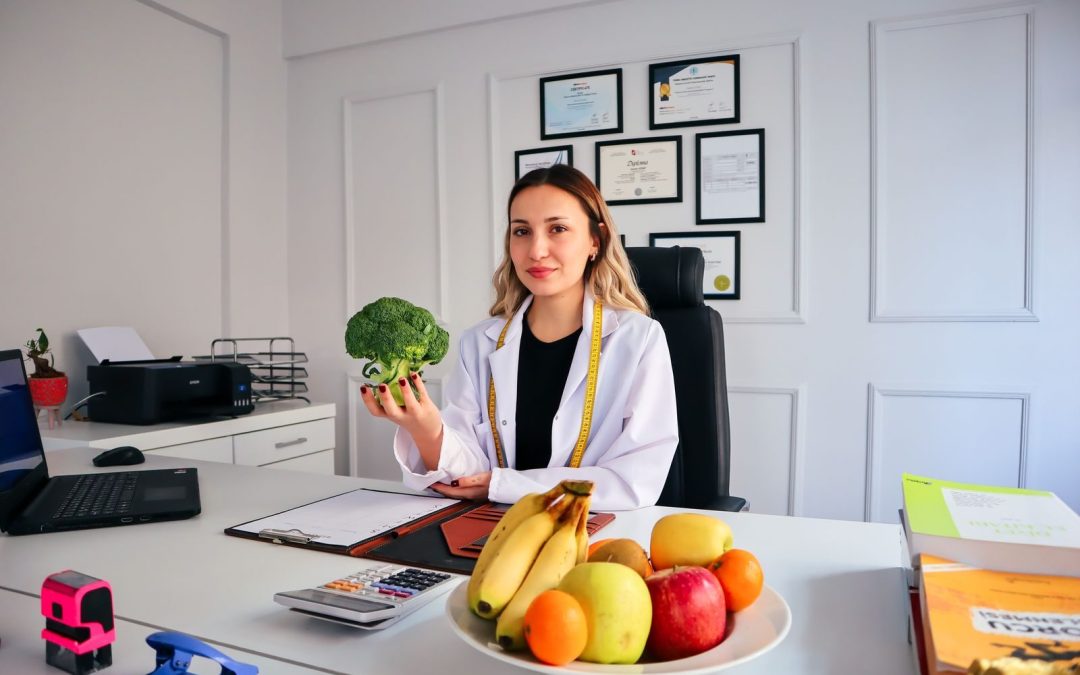
Search "dietitian near me" and you'll get a mix of registered dietitians, nutritionists, wellness coaches, and a few results that are hard to categorize at all. The titles sound similar, but they don't mean the same thing, and knowing the difference before you book can save you a wasted appointment or, worse, advice from someone without the training to give it.
RD, RDN, and "Nutritionist": What the Titles Actually Mean
A registered dietitian is a credentialed healthcare professional, and you can recognize one by the letters RD or RDN after their name. Per Cleveland Clinic, both credentials require the same accredited education, a supervised practice component, and a national exam, so the two titles are interchangeable rather than a step apart.
"Nutritionist," on the other hand, isn't a protected title everywhere. According to the Academy of Nutrition and Dietetics, every registered dietitian is a nutritionist, but not every nutritionist is a registered dietitian. In states without licensing requirements for the term, someone can call themselves a nutritionist with little more than a weekend certificate. That doesn't automatically mean their advice is bad, but it does mean the credential alone won't tell you much.
Checking Credentials Before You Book
The RD and RDN credentials are issued and tracked by the Commission on Dietetic Registration (CDR), the credentialing body for the profession. CDR's overview of the RD credential explains what the designation requires and is a reliable way to confirm that a credential is current before your first visit, rather than taking a website bio at face value.
It's also worth asking directly, in plain language, whether the person you're considering holds an active RD or RDN credential and, if your state licenses the profession, an active state license as well. A legitimate practitioner will answer this without hesitation.
A quick web search for a practitioner's name alongside "RD" or "RDN," or a direct look-up through CDR's credential verification, takes less time than reading a single bio page and gives you a much more reliable answer than a title on a website. If a practitioner's site or social media only uses the word "nutritionist" with no further detail, that's worth a follow-up question rather than an assumption either way.
State Licensing: What "LD" Means
Beyond the national RD/RDN credential, many states require a separate license to practice, often shown as "LD" or "LDN" after the RD/RDN letters. Licensing rules vary by state, and this consumer FAQ from a state affiliate of the Academy of Nutrition and Dietetics is a useful example of how one state explains the distinction between the national credential and state-level permission to practice. If you're unsure what your state requires, your state's board of health or dietetics licensing board can confirm it directly.
What to Ask Before Your First Appointment
Once you've confirmed someone is a credentialed, licensed dietitian, a short round of questions before booking can help you find the right fit:
- Do you have experience with my specific concern? Some dietitians hold additional board certifications for areas like sports nutrition, oncology nutrition, pediatric nutrition, or kidney disease.
- Do you accept my insurance, or is this an out-of-pocket visit? Coverage for nutrition counseling varies widely by plan and by diagnosis.
- Are visits in person, virtual, or both? This matters more for ongoing care than for a single consultation.
- What does a typical first session look like? A credentialed dietitian should be able to describe their process clearly.
For a full list of the specialty board certifications RDs and RDNs can hold, CDR's credential placement guide lists the current designations, which is helpful if a practitioner's bio includes letters you don't recognize.

What Board Certifications Can Add
Beyond the base RD/RDN credential, some dietitians go on to earn board certifications in a specific area of practice. These aren't required to practice generally, but they signal focused, tested expertise if your situation calls for it. Common specialty certifications include sports dietetics (CSSD), oncology nutrition (CSO), pediatric nutrition (CSP), renal nutrition (CSR), and gerontological nutrition (CSG), among others.
If you're managing a specific condition, such as kidney disease, an eating disorder, or a cancer diagnosis, a dietitian with the matching specialty certification will typically have deeper, more current training in that area than a generalist. That said, plenty of excellent dietitians without a specialty certification are well equipped for general weight management, heart-healthy eating, or diabetes education, so don't treat the absence of a specialty letter as a red flag on its own. Ask directly about their experience with your specific concern rather than screening on credentials alone.
In-Person vs. Virtual Care
Telehealth has made it much easier to work with a registered dietitian regardless of where you live, and many RDs now offer virtual consultations alongside or instead of in-person visits. Virtual care can be a good fit if you have a busy schedule, live in an area with few local options, or simply prefer meeting from home. In-person care can be worth prioritizing if your situation involves physical assessments, if you value the accountability of a scheduled visit outside your house, or if you're working with a specialist who isn't available virtually in your state.
One licensing wrinkle worth knowing about: a dietitian generally needs to be licensed in the state where the patient is physically located at the time of the appointment, not just the state where the practice is based. If you're considering a virtual dietitian based out of state, it's worth confirming they're licensed to see patients in your state before you book.
Where to Start Looking
Dietfind's own directory of local registered dietitians is built to make this search easier: you can browse local listings and use the credential and licensing questions above to narrow things down before you ever pick up the phone. If your search turns up a broader mix of nutrition professionals, Dietfind's nutritionists category is worth a look too, with the same credential-checking approach applied before booking.
Finding the right dietitian isn't about picking whoever appears first in a search. A few minutes checking credentials and asking the right questions up front means you walk into that first appointment with someone who's actually qualified to help.
Copyright Notice
© 2026 by Dietfind.com, All rights reserved. No part of this document may be reproduced or transmitted in any form or by any means, electronic, mechanical, photocopying, recording, or otherwise, without prior written permission.
Health Disclaimer
This article is for informational purposes only and is not a substitute for professional medical or nutrition advice. Credentialing requirements vary by state and can change; always verify a practitioner's current credentials and licensing directly before booking an appointment.

Trackbacks/Pingbacks