Most weight loss advice focuses on willpower: eat less, choose better, resist temptation. But willpower is a limited resource, and it tends to run out by the end of a long day, which is exactly when most people find themselves standing in front of an open pantry. A more reliable strategy is to change the environment around you so that the easy choice and the healthy choice are the same choice. Here's how to set up your kitchen, your shopping habits, and your eating space to work with you instead of against you.
Set Up Your Kitchen and Pantry
What you see first is what you tend to eat first. Rush University Medical Center points to research showing that people eat roughly 92 percent of whatever ends up on their plate, which means the amount you serve yourself matters more than willpower once the food is in front of you. Pre-plating meals in the kitchen, rather than serving family-style at the table, and leaving serving dishes off the table entirely, makes second helpings a deliberate choice rather than an automatic one.
Plate size plays a role too. Mayo Clinic's registered dietitians recommend dishing up a single serving and putting the package away rather than eating straight from the box or bag, where it's easy to lose track of how much you've actually had. Swapping a 12-inch dinner plate for a 9 or 10-inch one is a small, one-time change that resets your default portion without requiring you to think about it at every meal.
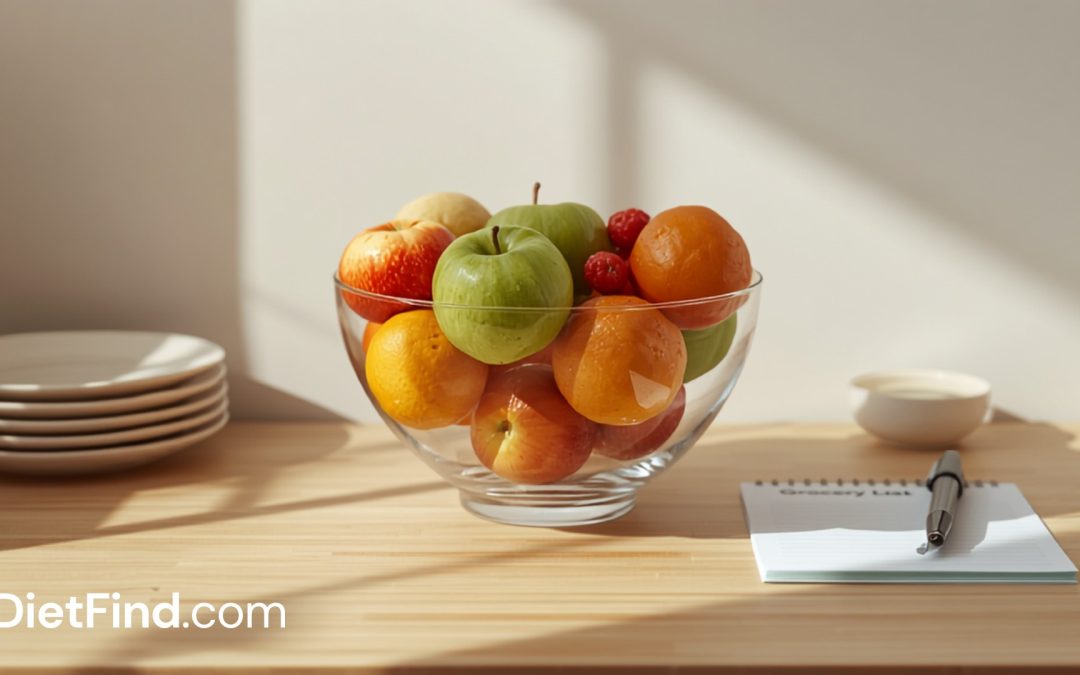
Visibility works both directions. Keep cut fruit, washed vegetables, or other ready-to-eat healthy options at eye level in the fridge and on the counter. Move less helpful snacks to the back of a high shelf or an opaque container. You're not banning any food, just adding a few extra seconds of friction before you reach for it, which is often enough to make you stop and decide whether you actually want it.
Rethink Your Grocery List
The choices you make in the grocery store determine what choices are even available to you at home later that week. Access matters at a public health level too: the CDC's work on healthy food environments notes that making healthier foods available and convenient is one of the most effective levers for helping people actually choose them, and the same principle applies at the scale of your own kitchen.
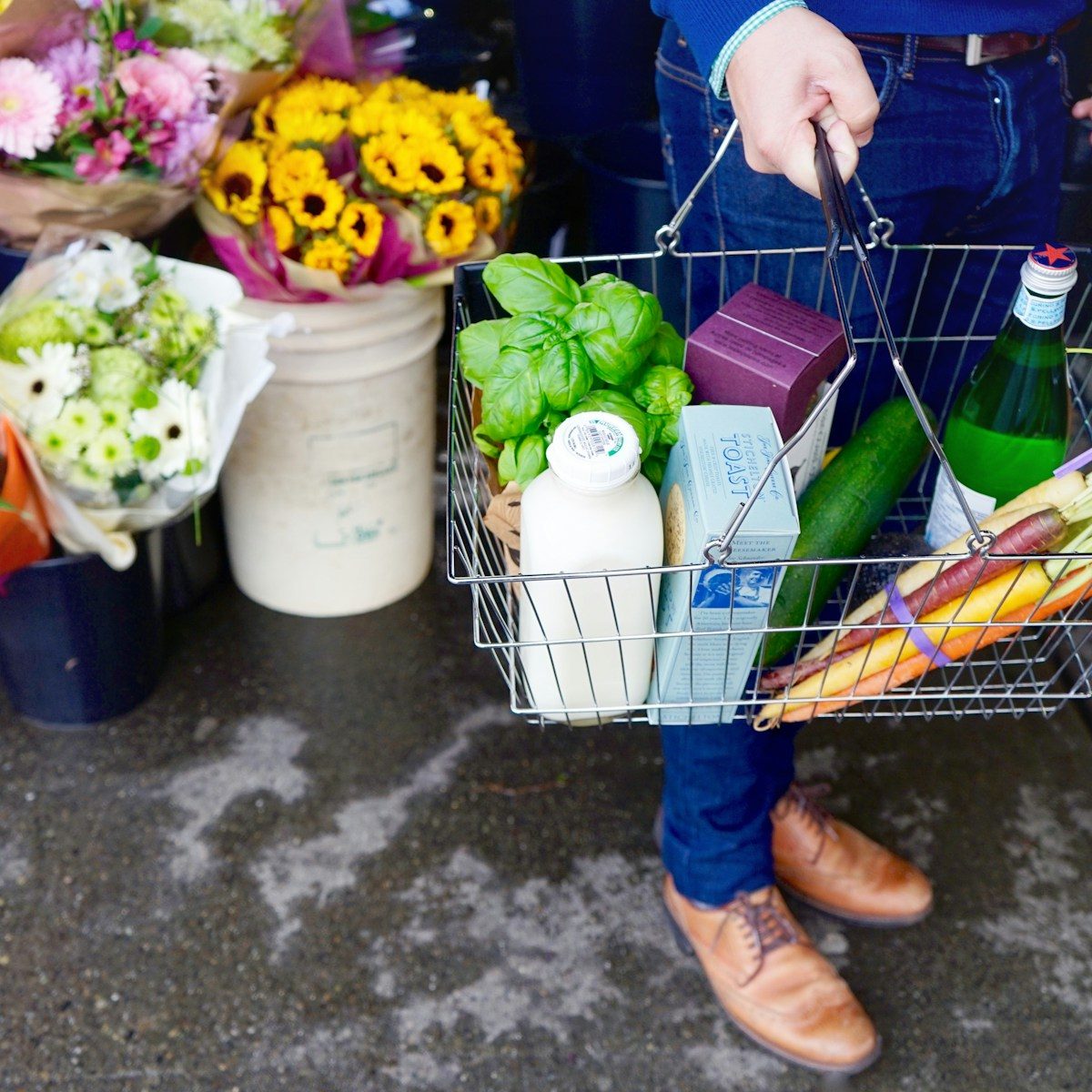
A short list of practical habits makes this easier to apply. Write your list before you go, organized by section of the store, and buy only what's on it. Shop after a meal rather than on an empty stomach, since hunger reliably narrows your food choices toward whatever's fastest and most calorie-dense. And do most of your shopping around the perimeter of the store, where fresh produce, proteins, and dairy tend to live, saving the center aisles for a shorter, more deliberate list of packaged staples.
Create a Distraction-Free Eating Space
Where and how you eat affects how much you eat, independent of what's on the plate. Harvard Health Publishing recommends eating at a table instead of in front of a screen, setting a timer for about 20 minutes to pace the meal, and putting your fork down between bites. That 20-minute window isn't arbitrary: it takes time for fullness signals from your stomach to reach your brain, so eating quickly tends to mean eating past the point where you'd otherwise stop.
According to the Harvard T.H. Chan School of Public Health's Nutrition Source, spacing meals at consistent times and giving yourself enough time to actually sit down and eat reduces the odds of getting overly hungry and defaulting to whatever's quickest. A cluttered, TV-on, phone-in-hand dinner makes all of this harder, not because distraction is a moral failing but because it genuinely interferes with noticing when you're full.
Make Movement the Easy Choice
The same logic that applies to food applies to activity. If workout clothes are in a drawer and the yoga mat is buried in a closet, a walk or a home workout has to clear a small hurdle before it happens. Keeping shoes by the door, a mat unrolled in a visible spot, or a bike where you'll actually see it removes that hurdle. None of this replaces a real exercise plan, but it does make the five-minute version of exercise more likely to happen on the days a full workout doesn't.
The Same Principle Applies When You're Not at Home
Restaurants are designed around the opposite of everything above: oversized default portions, bread baskets that arrive before you've ordered, and menus built to encourage extras. You can't redesign a restaurant, but you can apply the same friction-based thinking to it. Ask for a to-go container at the start of the meal and portion out what you'll actually eat right away, rather than deciding halfway through a full plate. Order a smaller size or an appetizer portion when it's offered instead of defaulting to the entrée. Skip the bread basket rather than eating from it while you decide what to order, since that's a decision you can make once instead of resisting bite by bite.
The same idea extends to the workplace, where a shared box of donuts or a candy dish on someone's desk functions exactly like a visible snack on your kitchen counter. You don't have control over other people's choices, but you can control where you sit, whether you keep your own healthier snack within reach, and whether you walk past the break room on your way in each morning.
Small Changes, Compounding Results
None of these changes are dramatic on their own, and that's the point. A kitchen that makes the healthy option the visible, convenient option removes dozens of small decisions per week that would otherwise rely on willpower alone. Over months, that adds up to real, sustained change in a way that short-term restriction usually doesn't.
If you want more structured support putting this into practice, a registered dietitian can help you build an eating plan suited to your kitchen, your schedule, and your goals. Dietfind's guide to finding a registered dietitian near you walks through how to check credentials before booking, and Dietfind's directory of local weight loss programs is a place to start if you're looking for a structured program rather than one-on-one counseling.
Copyright Notice
© 2026 by Dietfind.com, All rights reserved. No part of this document may be reproduced or transmitted in any form or by any means, electronic, mechanical, photocopying, recording, or otherwise, without prior written permission.
Health Disclaimer
This article is for informational purposes only and is not a substitute for professional medical or nutrition advice. Talk to your doctor or a registered dietitian before making significant changes to your diet, especially if you have an existing medical condition or a history of disordered eating.